 CRICKET WICKET
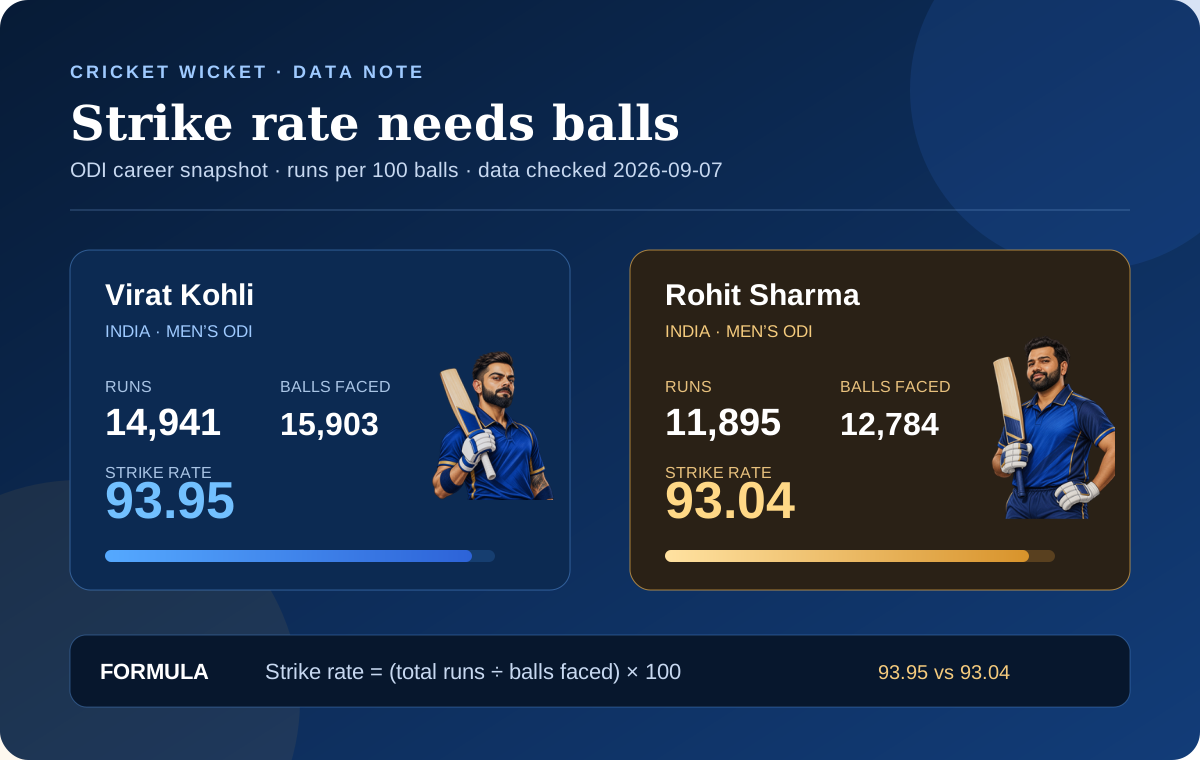
Strike rate describes scoring pace: runs per 100 balls faced. Without balls faced, a run total cannot tell us whether an innings was paced quickly or slowly.
Pace needs a workload
Virat Kohli has 15,080 ODI runs from 15,991 balls, a strike rate of 94.30. Rohit Sharma has 11,927 runs from 12,819 balls, a strike rate of 93.04. The formula is simple: 100 × runs ÷ balls. But the denominator keeps the comparison honest.
Strike rate should be read with role, era, opposition and format. A Test rate and a T20I rate answer different questions. If balls are not recorded, the correct result is unavailable, not zero.
Compare two international careers · Virat Kohli profile · Rohit Sharma profile · Create your own visual
Career figures are independent official snapshots. Batting average is runs ÷ dismissals; strike rate is 100 × runs ÷ balls faced. A missing denominator stays unavailable.